
When my son was placed in red for not listening, I didn’t rush to correct the behaviour. I paused and asked a different question.
What does listening actually require from a child?
Listening isn’t something children turn on because they’re told to. It’s a skill. And like any skill, it needs teaching, modelling, practice, and reinforcement over time.
This approach has changed how listening shows up in our home.
Why Children Struggle to Listen
Children don’t stop listening because they’re trying to be difficult.
They struggle to listen when they’re overwhelmed, distracted, emotionally dysregulated, or unsure of what’s expected. This is just as true for adults, even if we’re better at masking it.
When listening breaks down, it’s often a signal that something around the moment needs adjusting. The environment. The timing. The emotional load. Not necessarily the child.
Understanding this shifts the focus from punishment to support.
Defining What Listening Looks Like at Home
One of the most effective changes I’ve made is not assuming my children and I mean the same thing when we say “listen”.
We talk about it when everyone is calm.
I ask questions like:
- What does listening look like at home?
- How do you know when someone is listening to you?
- What helps you listen better?
Their answers are clear and practical. Looking at the person speaking. Still bodies. Waiting their turn. Following instructions the first time. Asking questions if unsure.
When children help define expectations, listening becomes a shared understanding rather than a vague command.
Using a Weekly Rewards Chart to Reinforce Listening
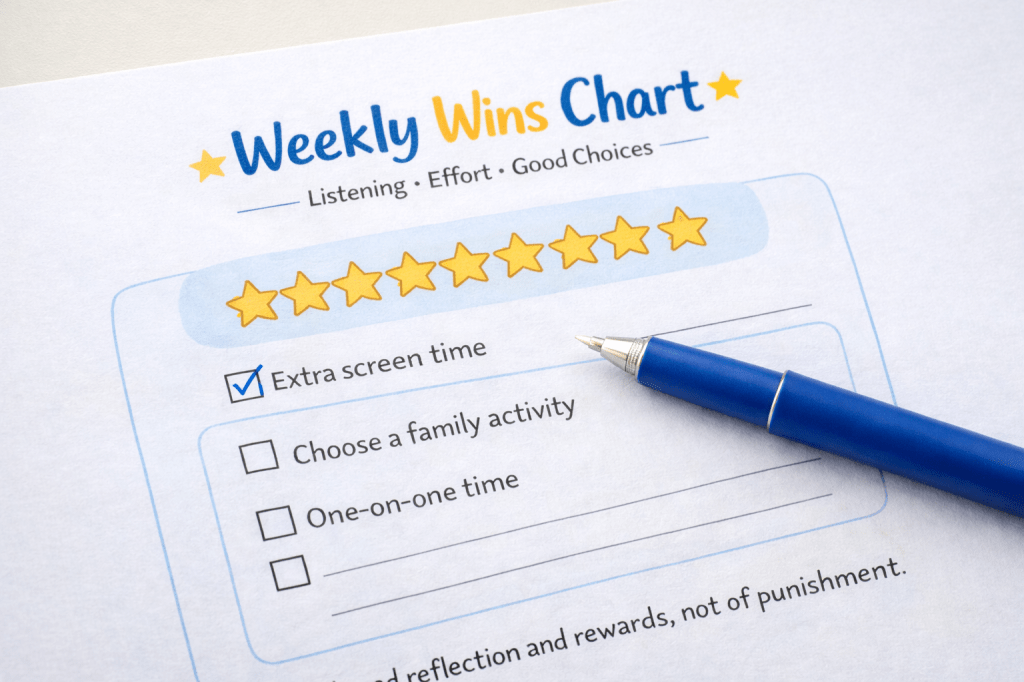
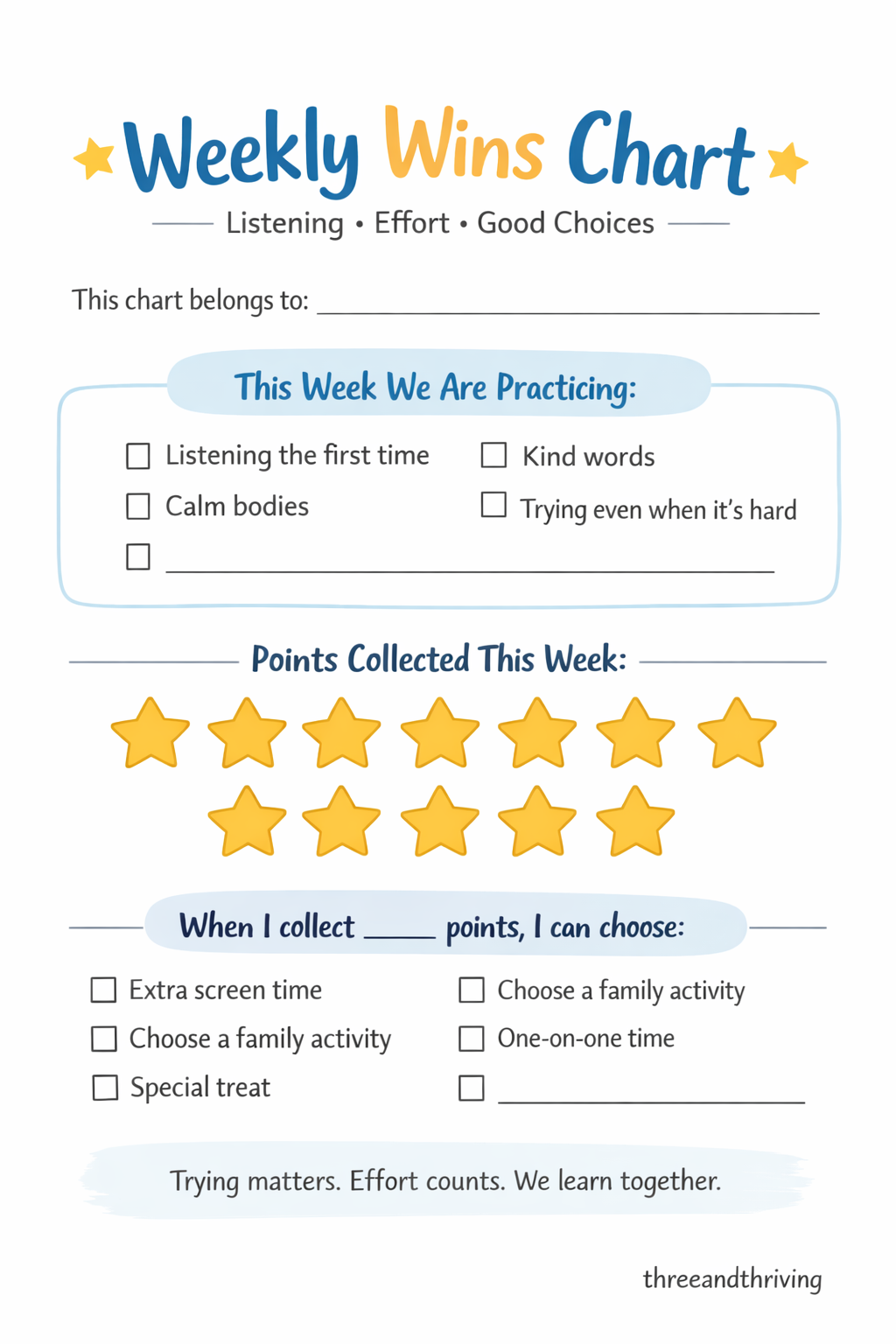
Instead of relying on repeated reminders or reacting in the moment, I use a Weekly Wins rewards chart to reinforce listening and effort.
The system is simple, predictable, and visible.
Throughout the week, when I notice moments of good listening or genuine effort, I acknowledge it and add a point to the chart. There’s no big celebration. Just recognition.
Points aren’t about perfection. They’re about awareness, effort, and trying.
At the end of the week, those points turn into something agreed in advance. Extra one-to-one time. Choosing a family activity. A small, meaningful reward.
This approach supports consistency and reduces power struggles, especially when parents are tired.
One evening last week, I noticed one of my children pause, look at me, and correct themselves before I’d said a word. It wasn’t perfect listening, but it was awareness. That moment earned a point. Not because everything went smoothly, but because effort showed up when it mattered.
If this approach feels helpful, you can download a copy of the Weekly Wins chart to use at home. It’s simple, flexible, and designed to support effort rather than perfection.
What to Do When Listening Still Breaks Down
Listening will still break down. Children are human. Parents are human.
When it happens, we slow the moment down rather than escalate it.
We reflect together briefly and calmly. Not to lecture or interrogate, but to understand.
I ask questions such as:
- What was happening just before I asked you to listen?
- How were you feeling in your body?
- What made listening hard in that moment?
- What might help next time?
These short reflective conversations help children connect behaviour to feelings and context, which supports long-term listening skills.
Why This Approach Supports Long-Term Behaviour
The Weekly Wins chart isn’t about controlling behaviour. It supports learning by making effort visible over time.
- It focuses on progress rather than mistakes
- It reinforces skills instead of fear of consequences
- It supports emotional regulation and consistency
Listening improves when effort is noticed and expectations are clear.
A Moment to Reflect
Instead of asking, “Why won’t they listen?”
Try asking, “What’s getting in the way of listening right now?”
Small shifts in awareness often lead to meaningful changes at home.
Signed L. Willoughby.
 Raising Three, Rebuilding Me
Leave a comment